
Accent Wall Ideas for Carolina Homes: 2026 Trends and How to Choose the Right Installer
Accent walls are changing.
A few years ago, an accent wall often meant painting one wall a different color. In 2026, homeowners are increasingly using architectural molding, natural wood, mineral finishes, decorative panels, lighting, and custom carpentry to create walls that feel like part of the architecture.
This shift works especially well in North and South Carolina, where homes range from contemporary new construction around Charlotte and Raleigh to traditional, transitional, and coastal interiors throughout the region.
If you are planning a feature wall, the goal should not be to follow a trend blindly. The best accent wall fits the proportions of the room, complements the architecture, and creates a clear focal point without making the space feel busy.
For a broader overview of available regional services, explore custom wall design across the Carolinas.
What Is Changing in Accent Wall Design?
The biggest trend is the move from simple decoration toward architectural detail.
Homeowners are using accent walls to:
• define living areas
• frame beds and seating zones
• add texture to large blank walls
• improve tall stairways and entry spaces
• introduce natural materials
• create stronger backgrounds for art or furniture
• integrate lighting into the architecture
Color still matters, but material, texture, scale, and shadow now play a much larger role.
A good starting point is to compare different accent wall styles and materials before deciding which direction fits your room.
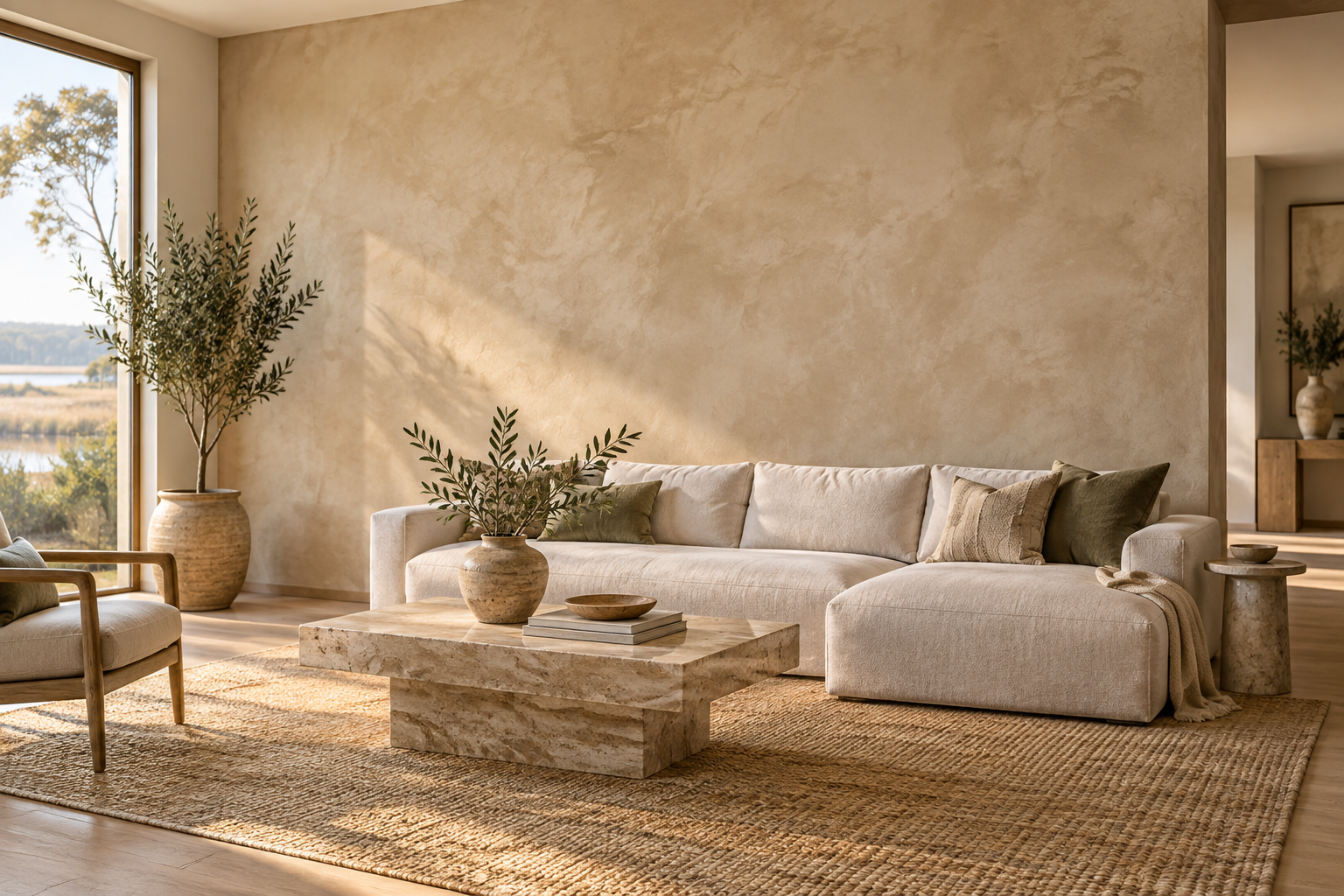
1. Limewash and Mineral-Style Finishes
Limewash-inspired finishes are gaining attention because they create depth without adding physical trim or panels.
Instead of a perfectly flat painted surface, the wall develops soft tonal variation and a subtle handcrafted appearance.
These finishes work especially well with:
• warm whites
• greige
• sand tones
• muted taupe
• earthy beige
• soft clay colors
They pair naturally with oak furniture, linen fabrics, stone, black metal, and organic contemporary interiors.
Limewash works particularly well in living rooms, bedrooms, dining spaces, and entryways where the wall itself should provide texture without becoming visually heavy.
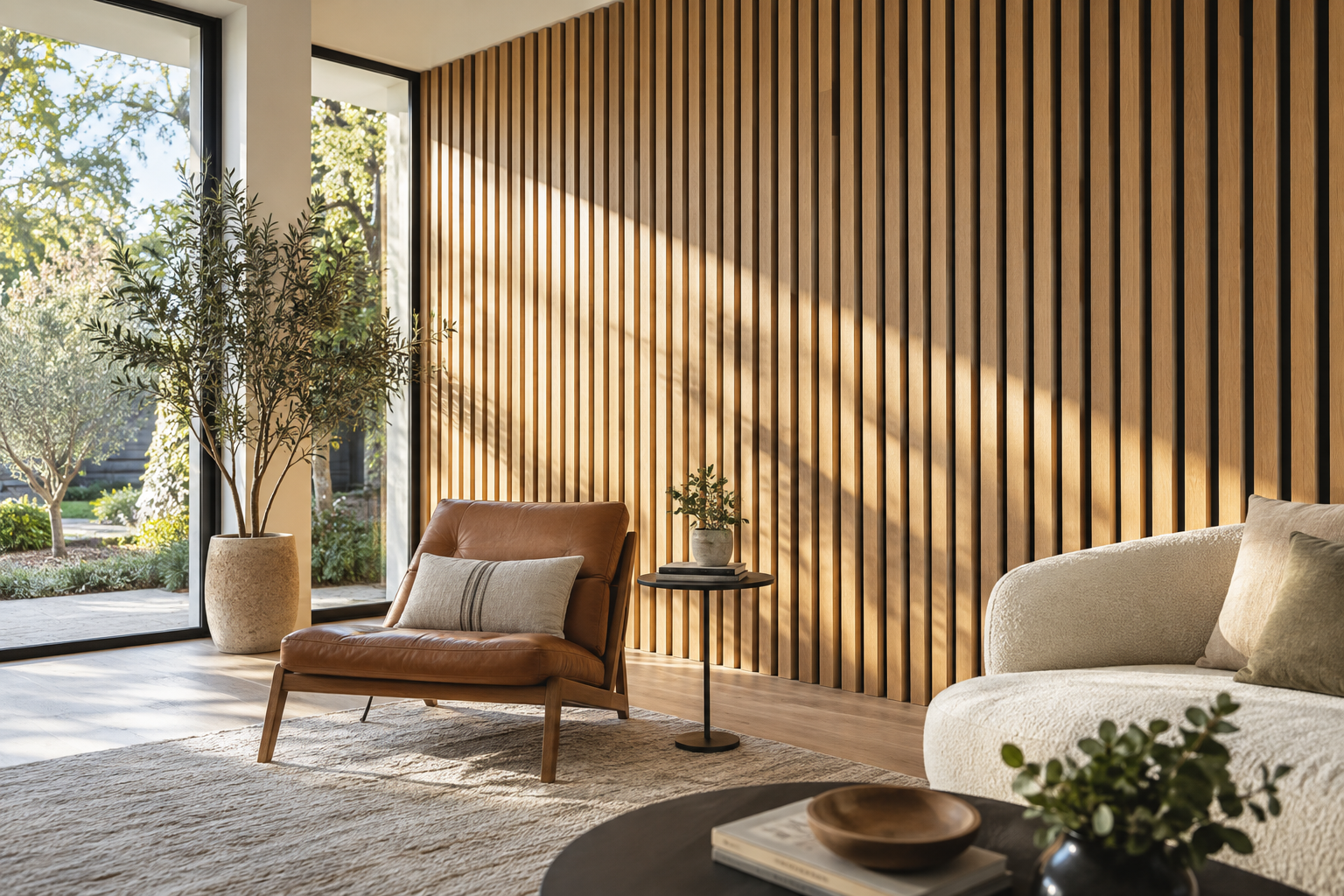
2. Natural Wood Slat Walls
Wood slat walls remain one of the strongest contemporary accent wall ideas.
Vertical slats introduce rhythm and make a room feel taller. Natural wood also adds warmth to interiors dominated by white, gray, or neutral finishes.
Popular applications include:
• living room walls
• walls behind sofas
• bedrooms
• home offices
• staircases
• dining areas
White oak works especially well in lighter interiors, while walnut and darker wood tones create a richer appearance.
The strongest designs usually keep the rest of the room simple. A full-height wood wall already has significant visual presence.
3. Board and Batten Is Becoming More Refined
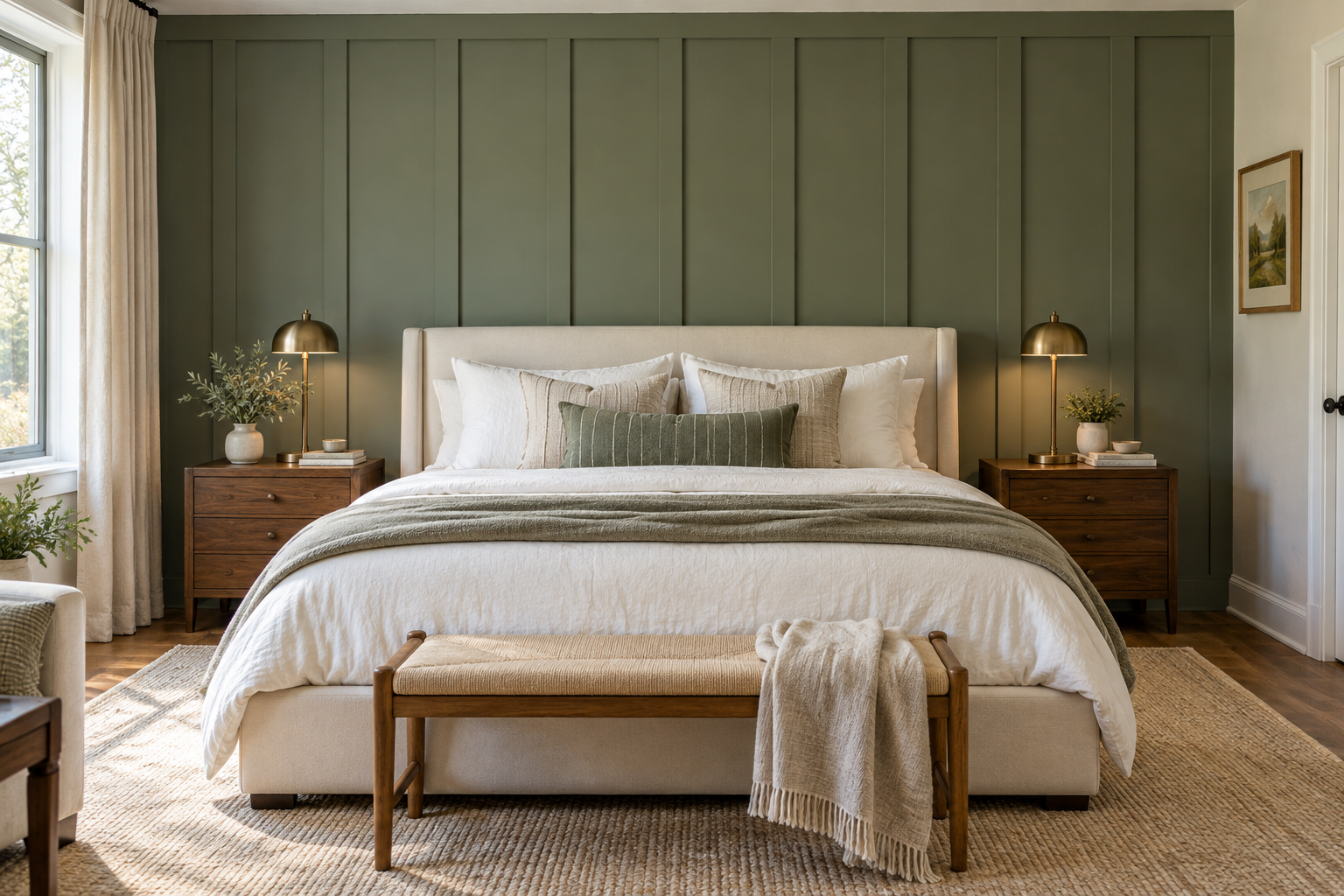
Board and batten is not disappearing. It is becoming cleaner and better proportioned.
Instead of tightly spaced farmhouse-style battens, many current designs use:
• wider spacing
• full-height layouts
• larger panels
• simplified geometry
• deeper contemporary colors
This allows board and batten to work in transitional and modern homes, not only farmhouse interiors.
Deep olive, charcoal, navy, warm white, and muted beige all work well with this treatment.
For homeowners exploring custom accent walls in Charlotte, board and batten is especially versatile because it works in bedrooms, dining rooms, living rooms, and entryways while adapting easily to both traditional and contemporary architecture.
4. Picture Frame Molding
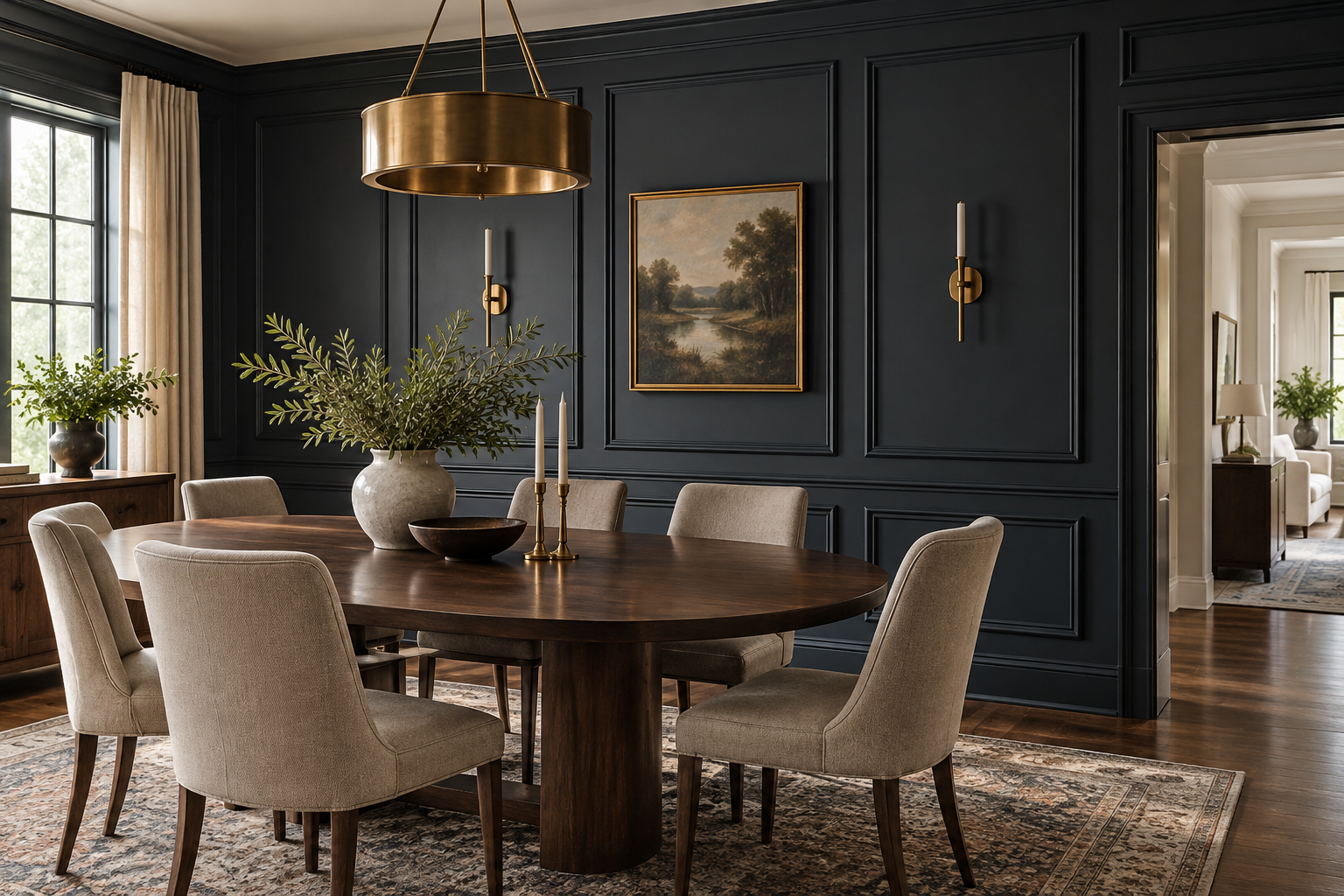
Picture frame molding is one of the strongest options for homeowners who want architectural detail without a highly contemporary look.
Large symmetrical frames can make a room feel finished and intentional while maintaining a timeless appearance.
Good locations include:
• formal living rooms
• dining rooms
• bedrooms
• hallways
• staircases
• home offices
Painting the molding and wall the same color creates a cleaner effect. Shadows provide the contrast rather than multiple paint colors.
The proportions matter more than the amount of molding. Oversized panels often look stronger than many small rectangles.
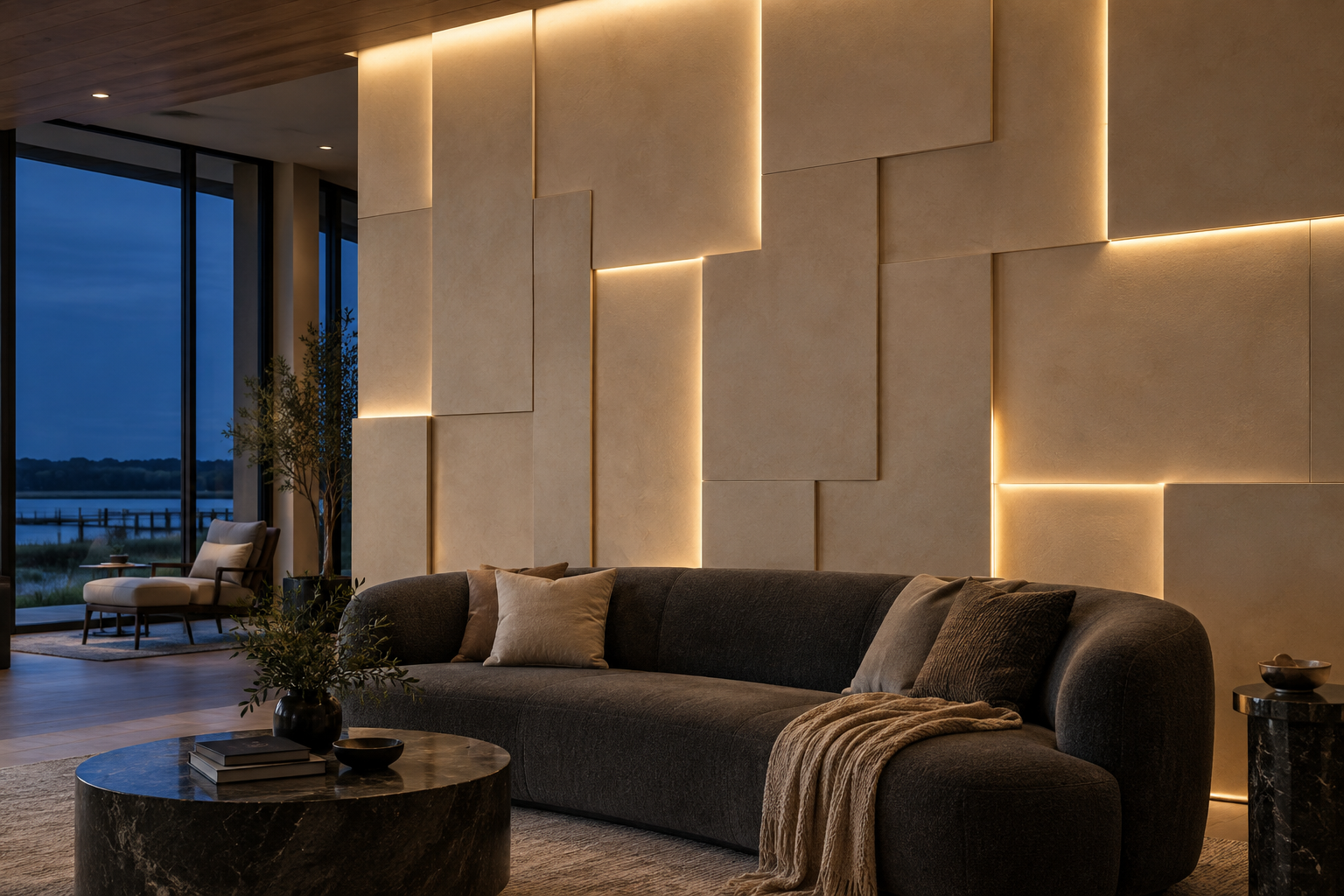
5. Dimensional Decorative Panels
Decorative wall panels are moving beyond simple flat sheets.
Current designs include:
• fluted surfaces
• geometric relief
• linear grooves
• oversized architectural panels
• repeating three-dimensional patterns
Lighting becomes especially important with this type of accent wall.
LED grazing light or well-positioned sconces emphasize texture and create shadows across the surface.
This style works well in contemporary dining rooms, entryways, living areas, and commercial interiors.
6. Dark Accent Walls
Dark walls continue to grow in popularity.
Popular colors include:
• charcoal
• navy
• deep olive
• warm black
• chocolate brown
The key is adding dimension.
A completely flat dark wall can feel unfinished. Adding molding, battens, panel details, artwork, or sconces creates shadows and gives the wall architectural structure.
Dark accent walls work particularly well in:
• bedrooms
• offices
• dining rooms
• libraries
• entertainment spaces
7. Accent Walls for High Ceilings
Many newer Carolina homes feature tall entryways, open staircases, and two-story living spaces.
These walls require a different design approach.
Small patterns often disappear visually when viewed from across a large room.
Better options include:
• oversized panel molding
• tall vertical battens
• floor-to-ceiling wood slats
• large geometric compositions
• textured plaster
• architectural lighting
The design should respond to the full height of the wall rather than treating the lower eight feet as a separate surface.
Charlotte Accent Wall Trends
Charlotte interiors often combine contemporary architecture with transitional details.
Popular directions include:
• full-height board and batten
• panel molding
• white oak feature walls
• darker painted walls
• modern geometric trim
• Venetian plaster-inspired finishes
Large living rooms and tall walls also create opportunities for stronger architectural compositions.
Homeowners planning a local project can explore accent wall design and installation in Charlotte for examples of materials and styles designed specifically for residential spaces.
Raleigh Accent Wall Trends
Raleigh and the Triangle have a strong mix of new construction, family homes, and modern transitional interiors.
Feature walls often emphasize clean detailing and practical design.
Popular choices include:
• panel molding
• board and batten
• white oak slats
• modern shiplap
• staircase feature walls
• bedroom accent walls
• geometric designs
For local inspiration, custom accent walls in Raleigh include approaches ranging from traditional molding to contemporary wood and architectural feature walls.
When an Accent Wall Becomes a Media Wall
There is an important point where a decorative feature wall becomes a larger architectural project.
A TV accent wall might start with:
• wood slats
• decorative panels
• floating cabinet
• concealed wiring
Add a fireplace, custom cabinetry, shelving, larger electrical changes, and integrated lighting, and the project begins functioning as a media wall or entertainment center.
Homeowners considering this type of project can compare dedicated media wall solutions across North and South Carolina.
This distinction matters because a full media wall requires different planning than a decorative accent wall.
Which Rooms Benefit Most From an Accent Wall?
Living Room
Use the feature wall to anchor furniture and establish a focal point.
Good options:
• wood slats
• limewash
• large panel molding
• dimensional panels
Bedroom
The wall behind the bed naturally creates a focal area.
Good options:
• board and batten
• picture frame molding
• upholstered panels
• wood slats
• dark painted trim
Dining Room
Dining rooms work well with architectural treatments because they often contain fewer competing elements.
Good options:
• picture frame molding
• limewash
• decorative panels
• dark colors
Home Office
An accent wall creates a professional backdrop and adds character without requiring additional furniture.
Entryway
This is often the first architectural surface visitors see.
Large-scale molding, plaster, wood, or decorative panels work particularly well.
Staircase
Tall staircase walls provide an opportunity for large compositions that would overwhelm smaller rooms.
How to Choose the Right Accent Wall
Start with the room rather than Pinterest.
Consider:
Wall Size
A 10-foot bedroom wall requires different proportions than a 20-foot staircase.
Furniture Placement
The design should relate to beds, sofas, dining tables, consoles, and artwork.
Natural Light
Texture becomes more visible when light travels across the wall.
Interior Style
A contemporary home might suit slats or panels, while a transitional interior might look better with molding.
Maintenance
Highly dimensional surfaces collect more dust than simple trim or plaster finishes.
Budget
Painted trim, natural wood, plaster, and dimensional panel systems require different amounts of material and labor.
How to Find a Reliable Accent Wall Installer
The finished result depends heavily on installation quality.
An accent wall often looks simple in inspiration photos, but poor spacing, inaccurate cuts, weak surface preparation, and inconsistent paint finish become obvious once the project is complete.
Before hiring someone, look for the following.
1. Real Completed Work
Ask to see finished projects.
Look closely at:
• corners
• trim alignment
• spacing
• paint finish
• transitions to ceilings and baseboards
• outlet detailing
Renderings and inspiration photos show design ideas. Completed projects show workmanship.
2. A Clear Project Scope
The proposal should explain what is included.
For example:
• materials
• wall preparation
• trim or panel installation
• electrical work if required
• caulking and filling
• priming
• painting or staining
• cleanup
A low number means little if half the work is excluded.
3. Design Before Installation
The pattern should be planned around actual wall dimensions.
Doorways, windows, outlets, furniture, and ceiling height affect the layout.
A design that looks good in one room may not work when copied directly into another.
4. Proper Finish Work
Trim installation is only part of the project.
Professional results depend on:
• surface preparation
• filling nail holes
• sanding
• clean caulk lines
• consistent primer
• smooth paint finish
These steps often separate a finished architectural feature from basic carpentry.
5. Communication
A reliable installer should be able to explain:
• what information is needed
• the approximate budget
• material options
• scheduling
• the installation process
• what happens if conditions change
The regional Carolinas wall design team follows a process based on project photos, dimensions, design discussion, a defined proposal, and professional installation.
Questions to Ask Before Hiring
Before approving an accent wall project, ask:
• Is the design customized to my wall dimensions?
• What material will be used?
• Is surface preparation included?
• Is painting or staining included?
• Are electrical changes required?
• Who handles wall repair if needed?
• How will outlets and switches be integrated?
• What does cleanup include?
• Do you have photos of similar completed projects?
Good answers should be specific.
Trends Matter, but Proportion Matters More
Accent wall styles will continue to change.
Limewash, wood slats, decorative panels, board and batten, and picture frame molding all have a place in current interiors.
The strongest projects do not rely on a trend alone.
They combine:
• appropriate scale
• good material selection
• thoughtful lighting
• clean installation
• a design that belongs in the room
That is what allows an accent wall to remain relevant after the trend that inspired it changes.
Accent Wall Design Across the Carolinas
Homeowners throughout North and South Carolina are using feature walls to add architectural character to living rooms, bedrooms, staircases, offices, dining spaces, and entryways.
Explore accent wall and custom wall services across the Carolinas, or visit the dedicated local resources for Raleigh accent walls and Charlotte accent walls.
If your project includes a TV, fireplace, cabinetry, or a larger entertainment feature, explore custom media walls in the Carolinas as well.