
TV Media Wall vs Traditional Entertainment Center: What Modern Homes Prefer
Introduction
For decades the traditional entertainment center dominated living rooms. Large furniture units surrounded the television with shelves, cabinets, and decorative elements.
Today the design trend is shifting toward TV media walls — built-in architectural solutions that integrate the television, fireplace, lighting, and storage into one unified structure.
Homeowners across Florida, Colorado, and other modern markets increasingly choose media walls because they provide cleaner design, better space usage, and stronger visual impact.
This article explains the key differences between traditional entertainment centers and modern TV media walls, and why interior designers now recommend built-in media wall solutions for contemporary homes.
Traditional Entertainment Centers
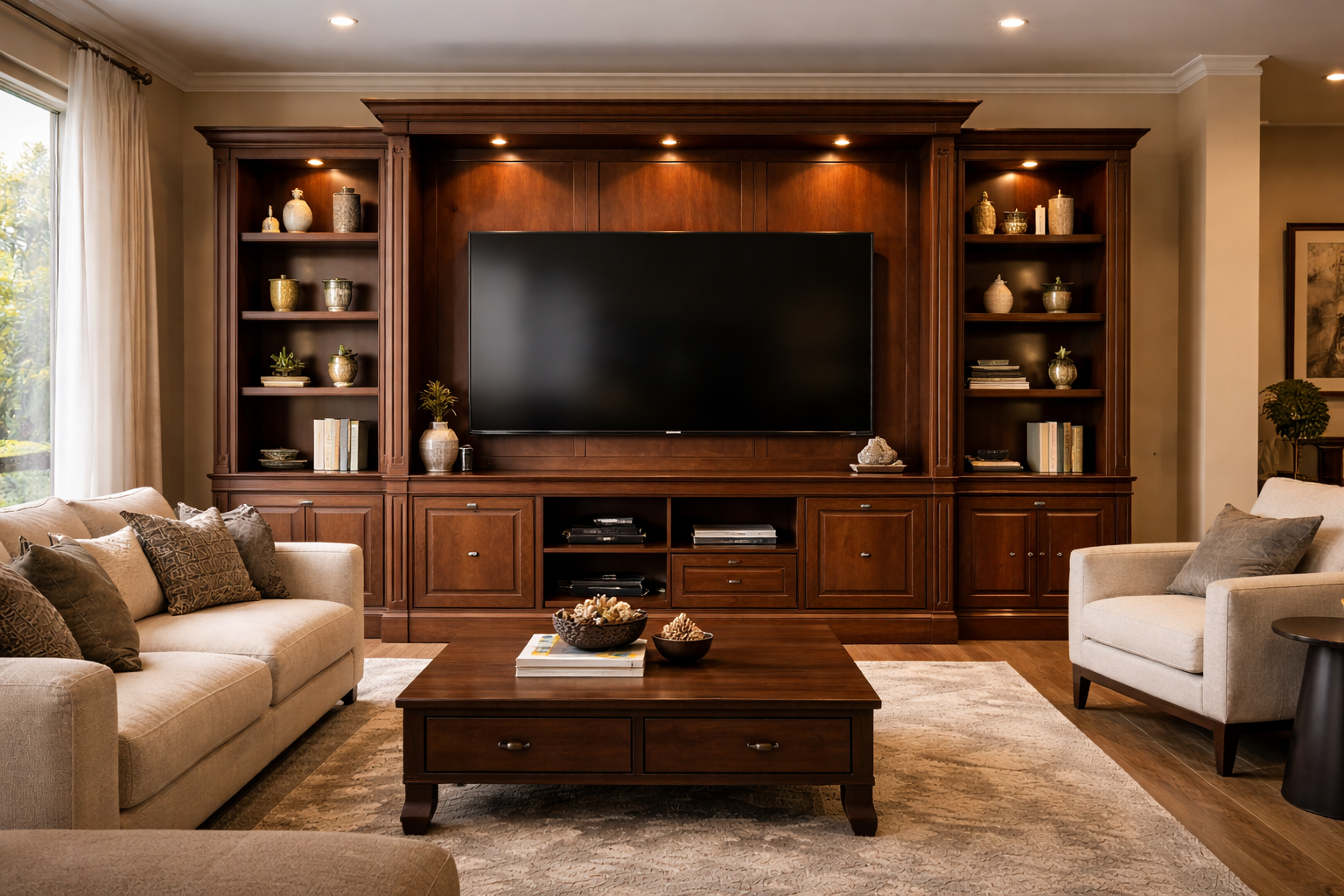
Traditional entertainment centers are furniture pieces designed to hold TVs, receivers, and decorative items.
Typical features include
• large side cabinets
• open shelving
• central TV compartment
• visible wires and electronics
• heavy wood construction
While these units were practical for older televisions and stereo systems, they often dominate the room visually.
Common disadvantages
• bulky appearance
• limited design flexibility
• outdated aesthetic
• inefficient use of wall space
As TVs became thinner and streaming replaced large audio systems, the need for oversized furniture decreased significantly.
What Is a TV Media Wall?
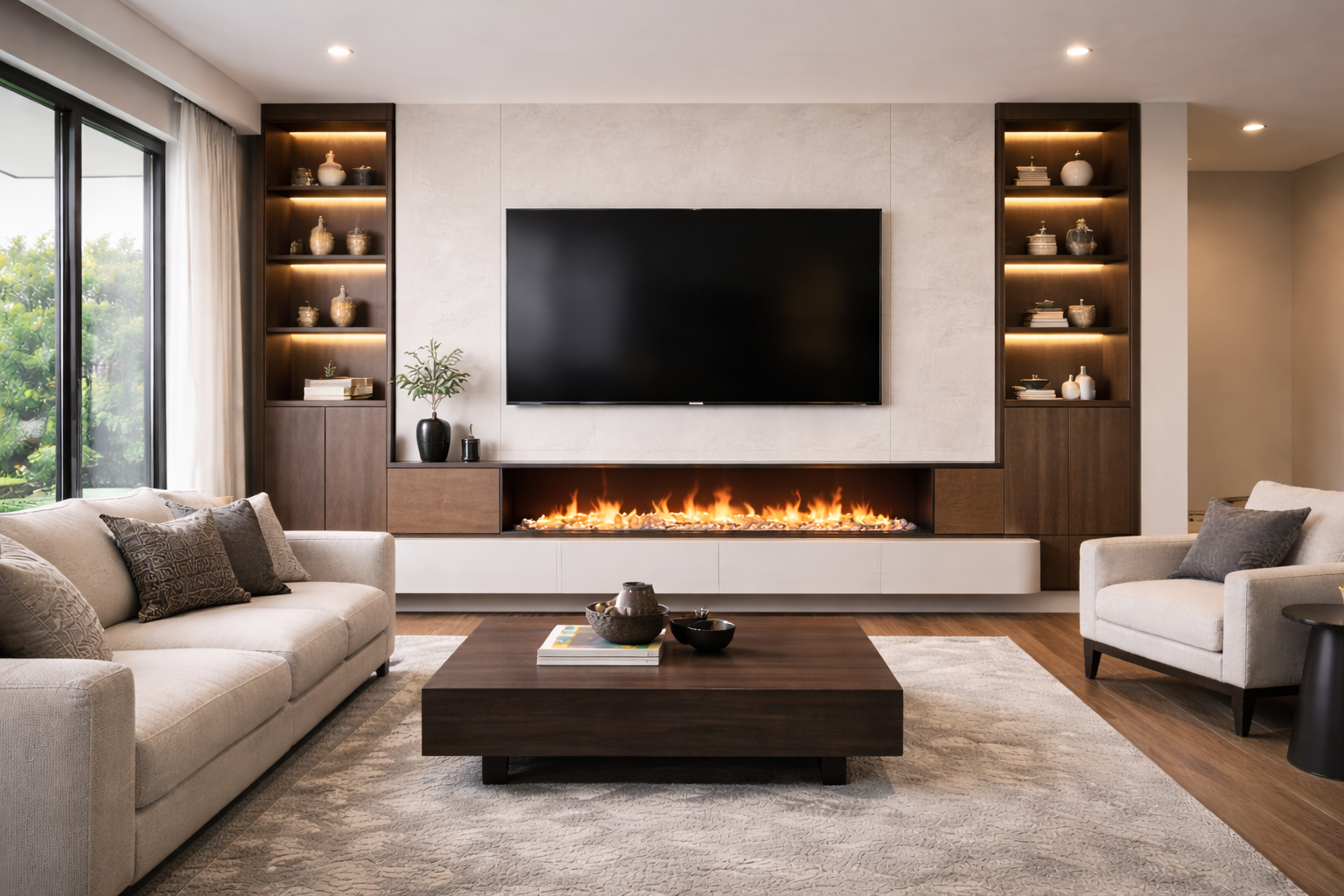
A TV media wall is a custom built architectural wall feature designed around the television.
Instead of placing furniture against the wall, the entire wall becomes the design element.
Media walls often include
• integrated electric fireplaces
• floating cabinets
• decorative wall panels
• built-in shelves
• hidden cable management
• LED accent lighting
These features create a clean and modern focal point.
Many homeowners now view the media wall as the centerpiece of the living room rather than a simple place to mount a television.
Key Advantages of Media Walls
1. Clean Architectural Design
Media walls integrate directly into the wall structure, eliminating bulky furniture.
This creates a sleek, modern appearance that complements contemporary interiors.
2. Better Space Utilization
Because the structure is built into the wall plane, the room feels more spacious and organized.
Floating cabinets and recessed fireplaces reduce visual clutter.
3. Integrated Lighting
LED lighting is frequently incorporated into shelves, panels, or niches.
This adds depth and ambiance while highlighting decorative elements.
4. Fireplace Integration
Electric fireplaces are one of the most popular features in media wall designs.
They add warmth and visual movement while turning the wall into a strong focal point.
Media Walls and Home Value
Custom architectural elements often increase perceived property value.
A professionally designed media wall
• enhances the living room layout
• creates a luxury focal point
• improves interior design consistency
For many homeowners, the media wall becomes one of the most photographed and appreciated features in the house.
Which Option Is Better?
Traditional entertainment centers still work for temporary setups or rental properties.
However, homeowners who want a refined interior typically prefer media walls because they provide
• custom design flexibility
• integrated lighting and fireplace options
• improved visual balance
• modern architectural appearance
As interior design continues evolving, media walls are rapidly replacing traditional entertainment centers in modern homes.
Conclusion
The shift from furniture-based TV setups to built-in architectural media walls reflects broader changes in interior design.
Today’s homeowners prioritize
• clean lines
• integrated lighting
• modern materials
• multifunctional wall design
A well-designed media wall transforms the living room into a cohesive design feature rather than simply a place to put a television.